
A few weeks ago I started Hoshi no Isan in Unreal Engine 5 and graybox-modelled the Kaguya Observation Lounge. This month I moved the project to Godot 4.7. The first Godot prototype is now walkable from start to finish: a shuttle docks with the Yamabiko, you step through an airlock corridor, and you can visit four rooms, each named for a real JAXA mission.
Why Godot
I wanted lighter tools and faster iteration. Godot scenes and scripts are plain text, so I can build, test and review the project from the command line, and a change takes seconds to see instead of minutes. I also wanted an honest answer to one question: can Godot look good enough for this game?
For a first-person ship interior, the answer so far is yes. Godot's lighting, ambient occlusion and glow handle the cream, charcoal and amber look from the concept art well. Where Unreal is clearly stronger is very large, very detailed exteriors. So I made a rule: anything huge and detailed is rendered in Blender, and everything you walk through is real time in Godot.
The arrival
The game opens on a seven-second cinematic rendered in Blender: a small shuttle crosses the gap between Earth and the Yamabiko and slides into a lit docking bay.
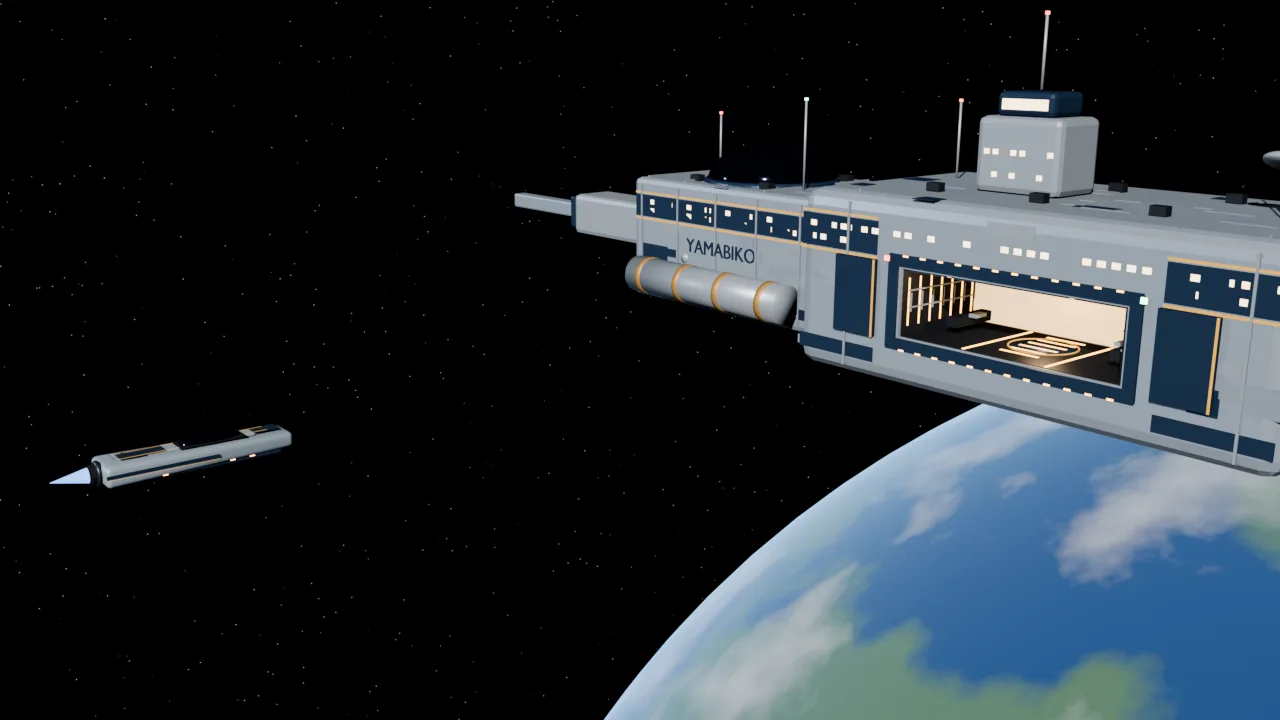
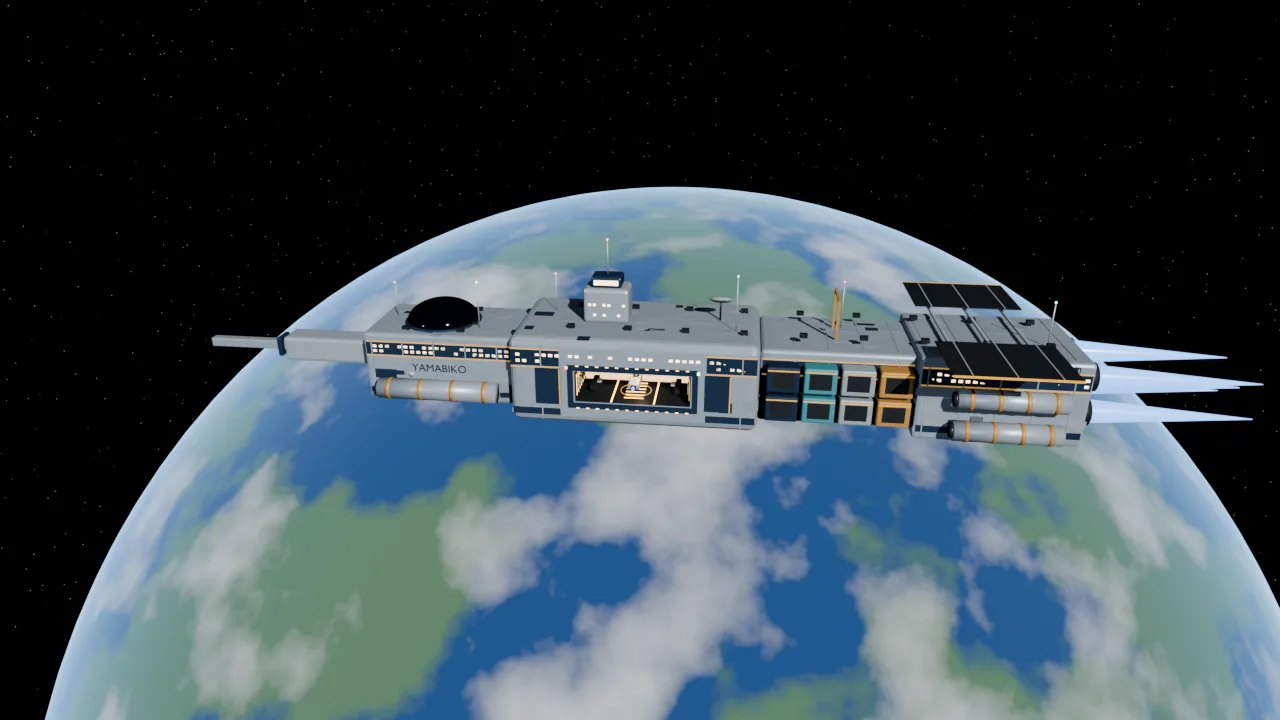
The Yamabiko is no longer a flat slab. I went through a large folder of spaceship reference art and rebuilt it in stepped sections: engine block, aft habitat with stacked cargo pods, a bay block with a bridge tower, a forward habitat under the Kaguya dome, and a nose spike. The livery stays pale hull, navy bands and orange pinstripes.
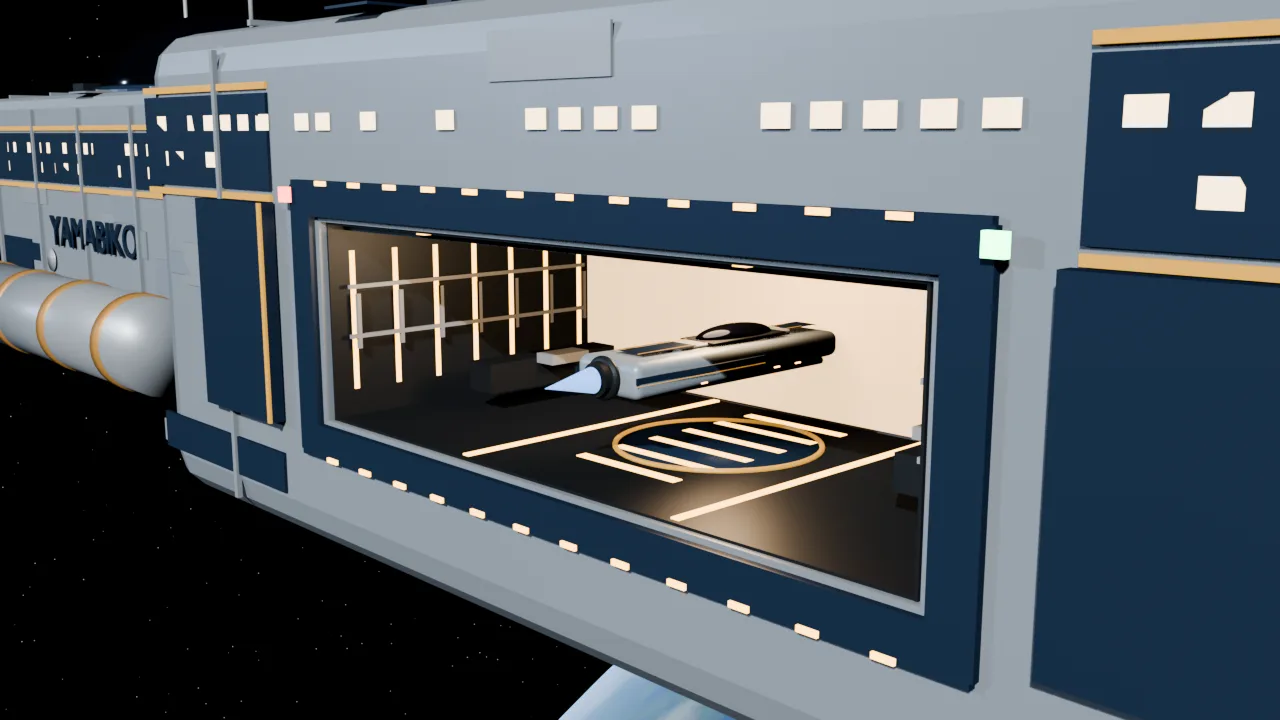
The video is encoded as Ogg Theora because that is the format Godot plays, and it cuts straight to the real-time game.
The corridor and four rooms
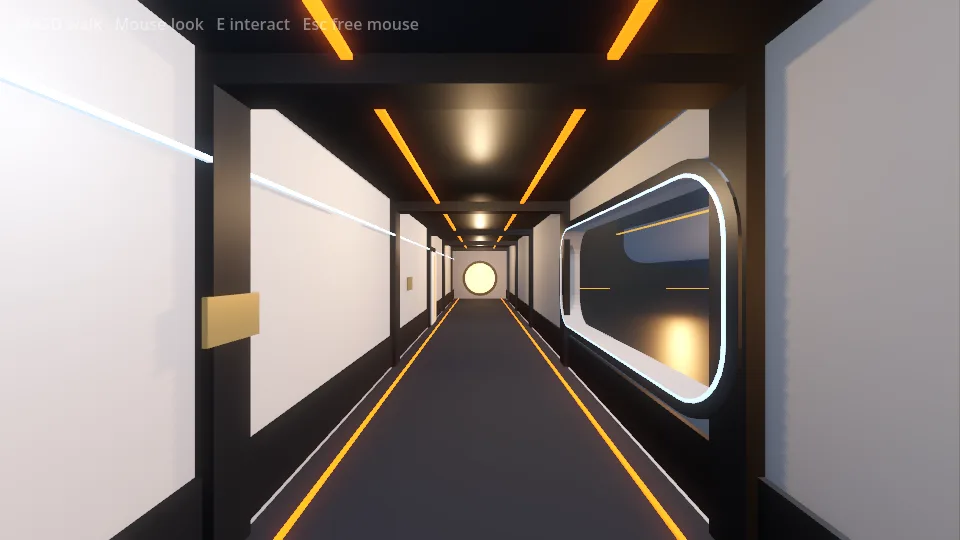
After the cutscene you arrive in an airlock corridor. A rounded window looks out on the docked shuttle, there are heritage plaques along the wall, and three crew doors lead to the rooms below.
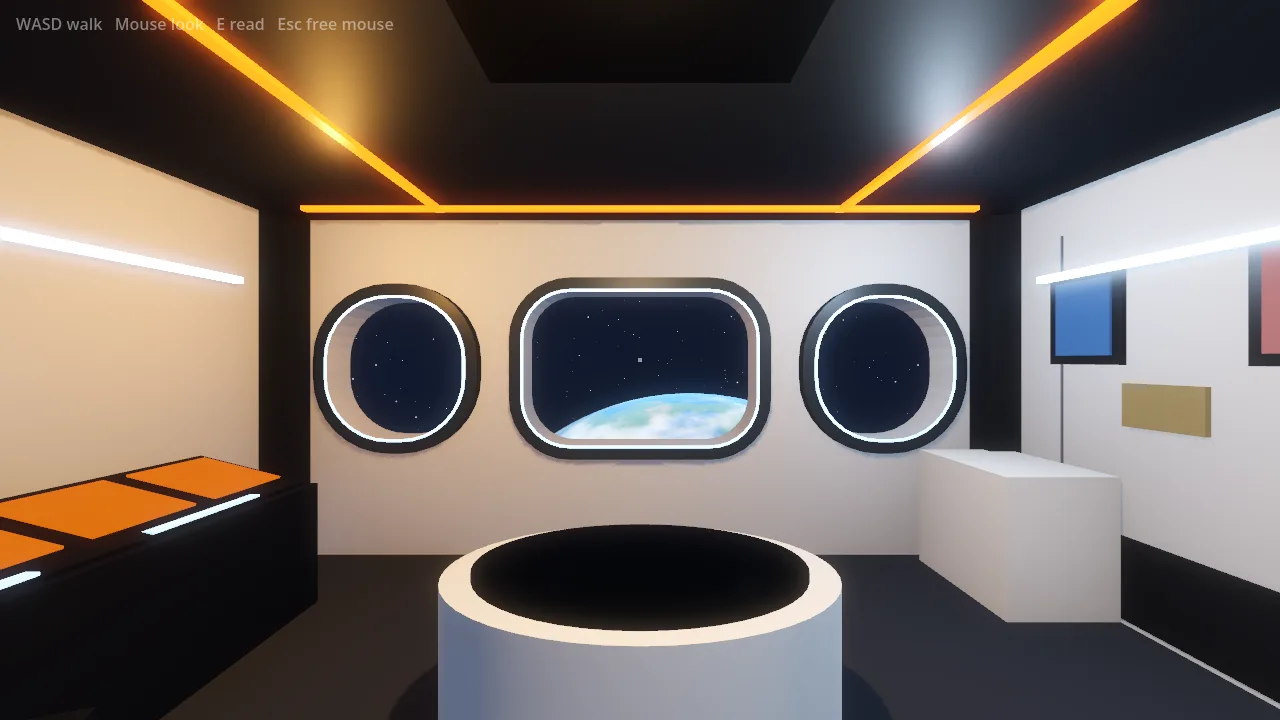
Kaguya Observation Lounge. The emotional heart of the ship, with three rounded windows onto Earth. Kaguya recorded the first high-definition footage of the Earth rising over the Moon's horizon, and in the finished game that footage will loop on the main viewport.
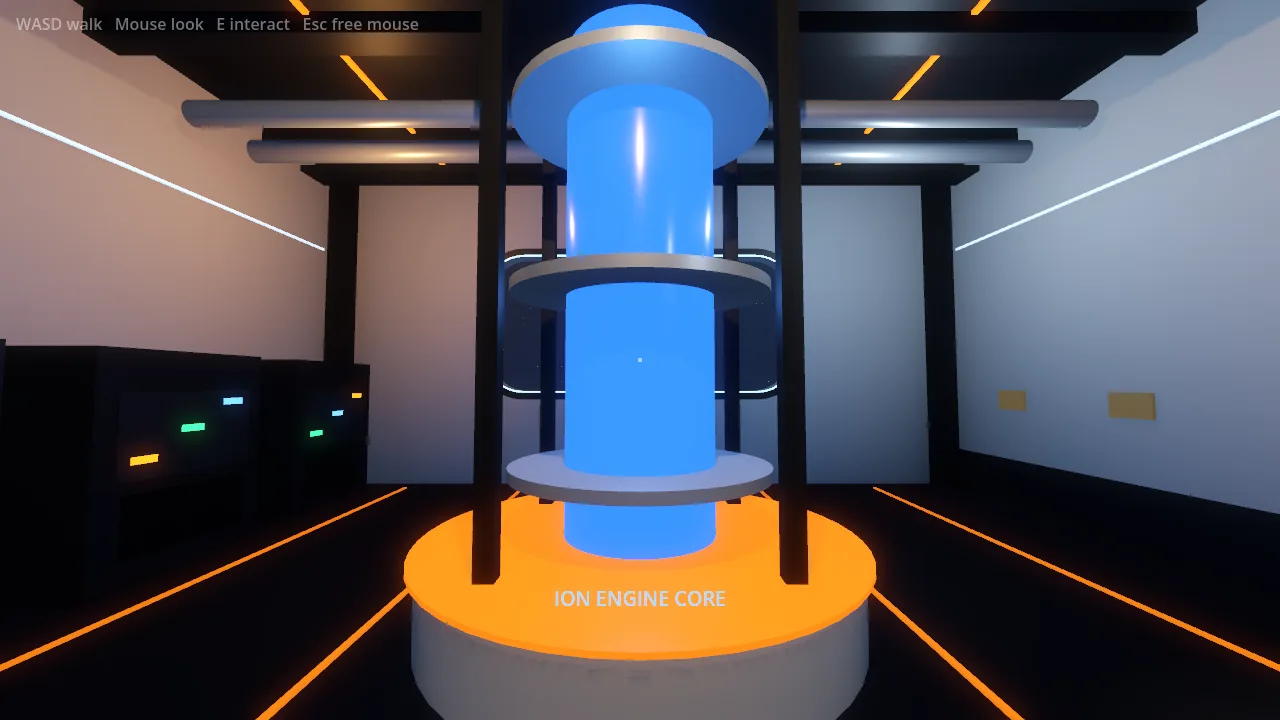
Hayabusa Engine Bay. A glowing ion-engine core under blue light. Hayabusa travelled on ion engines and brought back the first samples ever collected from an asteroid, so the room holds a replica sample capsule and plaques on the engines, the asteroid Itokawa, and Hayabusa2's trip to Ryugu.
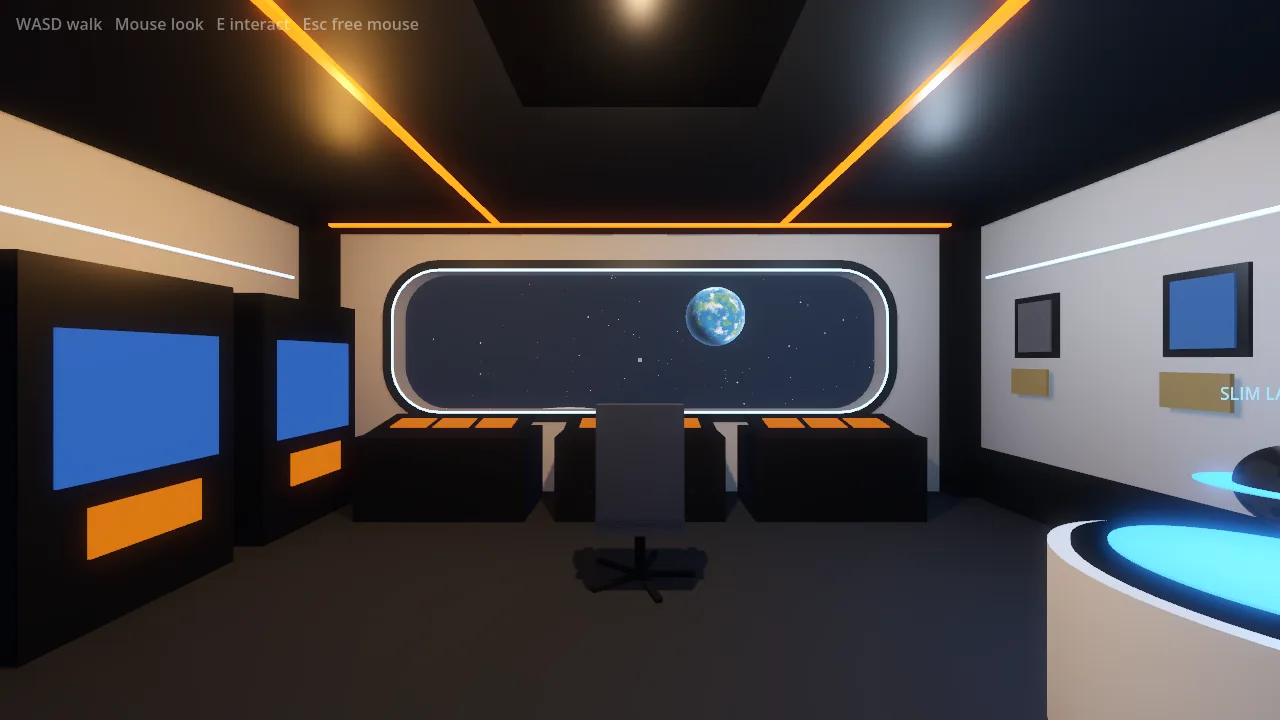
SLIM Navigation Bridge. A command deck with amber consoles and a wide window onto the Moon, with Earth hanging above it. SLIM, JAXA's Smart Lander for Investigating Moon, touched down in January 2024 close to its target, and a holographic table shows its landing site.
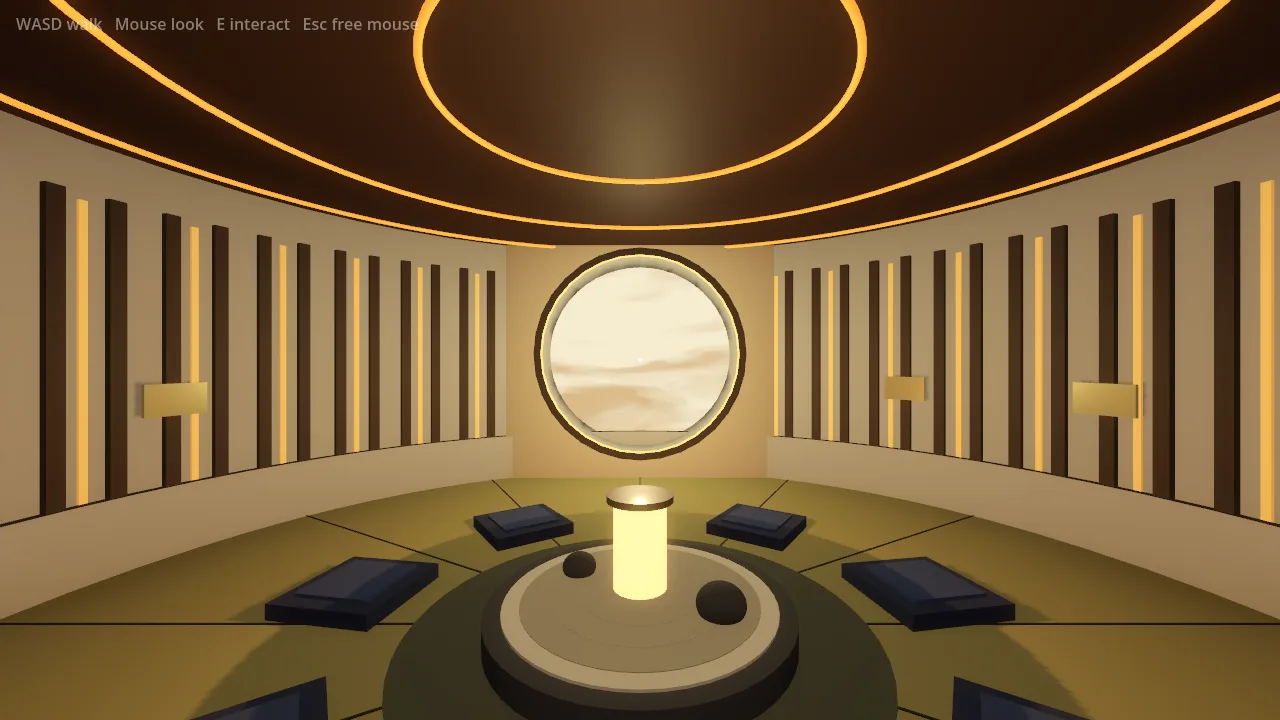
Akatsuki Meditation Room. The quiet one: a round room of warm wood and tatami around a small sand-and-stone basin and a paper lantern, with Venus filling a round window. Akatsuki means dawn. Its first attempt to enter orbit around Venus failed in 2010, and it succeeded in 2015.
How it is built
Every room is generated from a short script, so each scene is a few hundred readable lines instead of a binary file. The rooms share one small kit for walls, windows, lights, doors and plaques, which is why a new room now takes a single session. Doors fade to black, load the next scene and place you where you came from.
What is still rough
- Furniture is made of simple shapes. Real Blender models come next.
- There are no crew yet, and no sound.
- The docking video is 720p and the ship is a blockout.
- Some wall panels read as flat coloured rectangles rather than screens.
What's next
The ISS Heritage Gallery, then the first crew member with a simple dialogue and trust system, which is the part the whole game is built around. I will keep posting short logs like this one as each piece lands.
Disclaimer
This is a work-in-progress development log. Everything shown is a prototype and is subject to change without notice.
Back to Blog Hoshi no Isan