
The game opens on seven seconds of a shuttle docking with the Yamabiko, and until now those seven seconds were the weakest thing in the project. The ship was a pile of boxes and the planet was made up. Both have been replaced, and the shot now looks like the game I have in my head.
Before and after
Here is the same seven-second shot earlier today, and where it ended up. The camera move is almost the same, and nearly everything in front of it has changed.
A real planet
The Earth under the ship is now the real one. Its surface comes from NASA's public-domain maps: Blue Marble Next Generation for the land, and GEBCO elevation and ocean depth for the coastlines, relief and shallow seas. The planet is turned so that Japan sits in view, because this is a ship that remembers JAXA's history.
The clouds, the glowing atmosphere, the Moon and the star field come from the Procedural Space Kit, a commercial Blender pack. I could not find an official NASA cloud map, so the weather is generated rather than real. From this altitude you would have to look hard to tell, but the coastlines are the true ones.
The atmosphere taught me something. It left a fine grain across the oceans that would have shimmered in motion. Turning the atmosphere off proved where the grain came from, and switching denoisers removed it completely.
One hull instead of many boxes
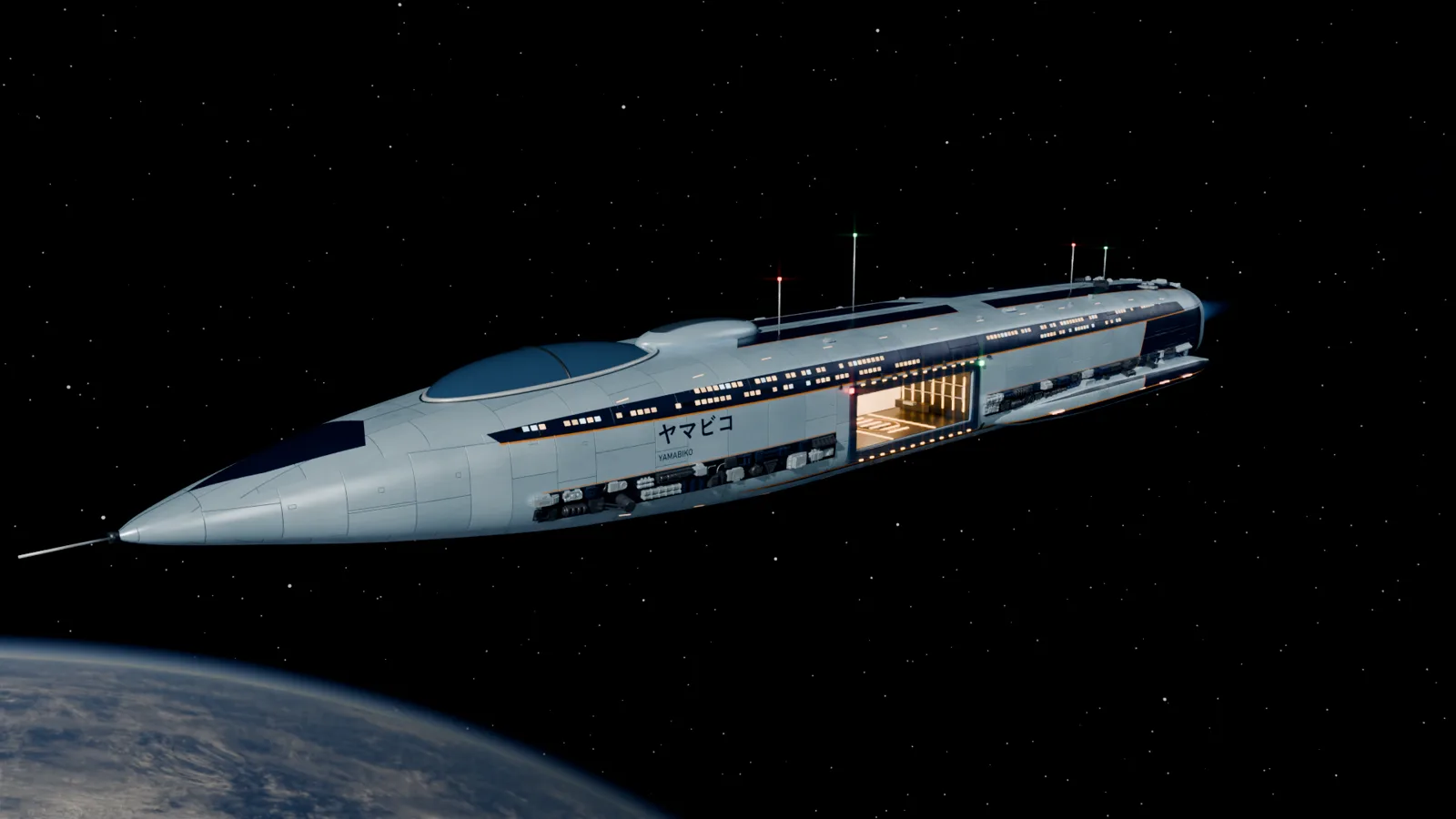
The old Yamabiko looked like a container ship made of crates. The new one is a single sculpted body about a kilometre long, following the language of the exterior concept art: a smooth pale blue hull, navy panels, orange pinstripes, a long glass canopy and a big open engine ring at the stern.
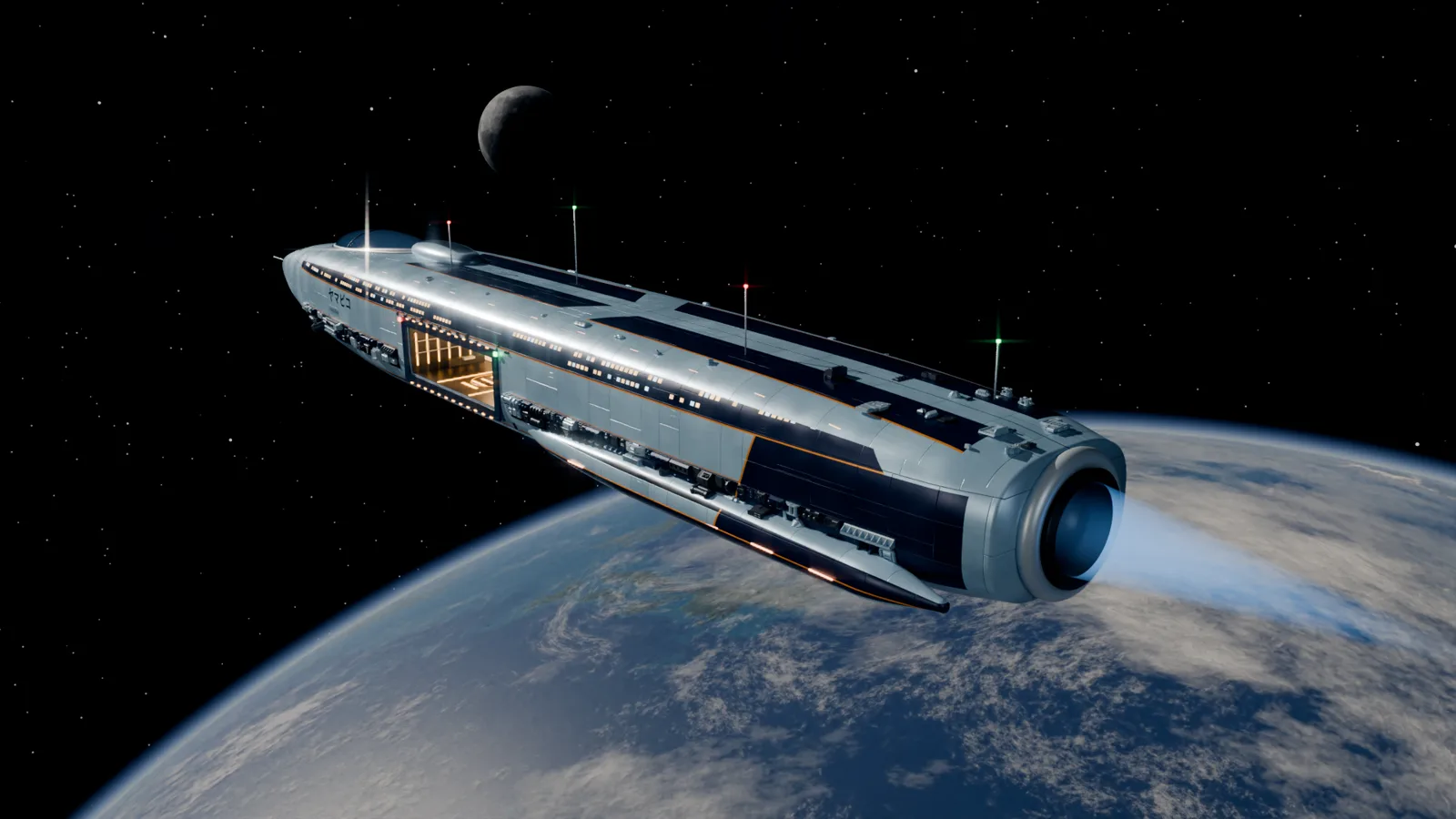
The hull is defined by a short table of cross-sections, and the paint is generated by a script: every panel line, window and stripe. Changing the livery takes seconds. The glass canopy over the Kaguya Observation Lounge has a collar traced along the exact line where the glass meets the hull.
The fine machinery comes from the Ultimate Sci-Fi Greebles pack. The temptation with greebles is to cover everything, so I did the opposite and packed most of them into a dark service trench along the flank. A clean hull beside dense machinery gives a much stronger sense of scale than detail spread evenly.
The shuttle
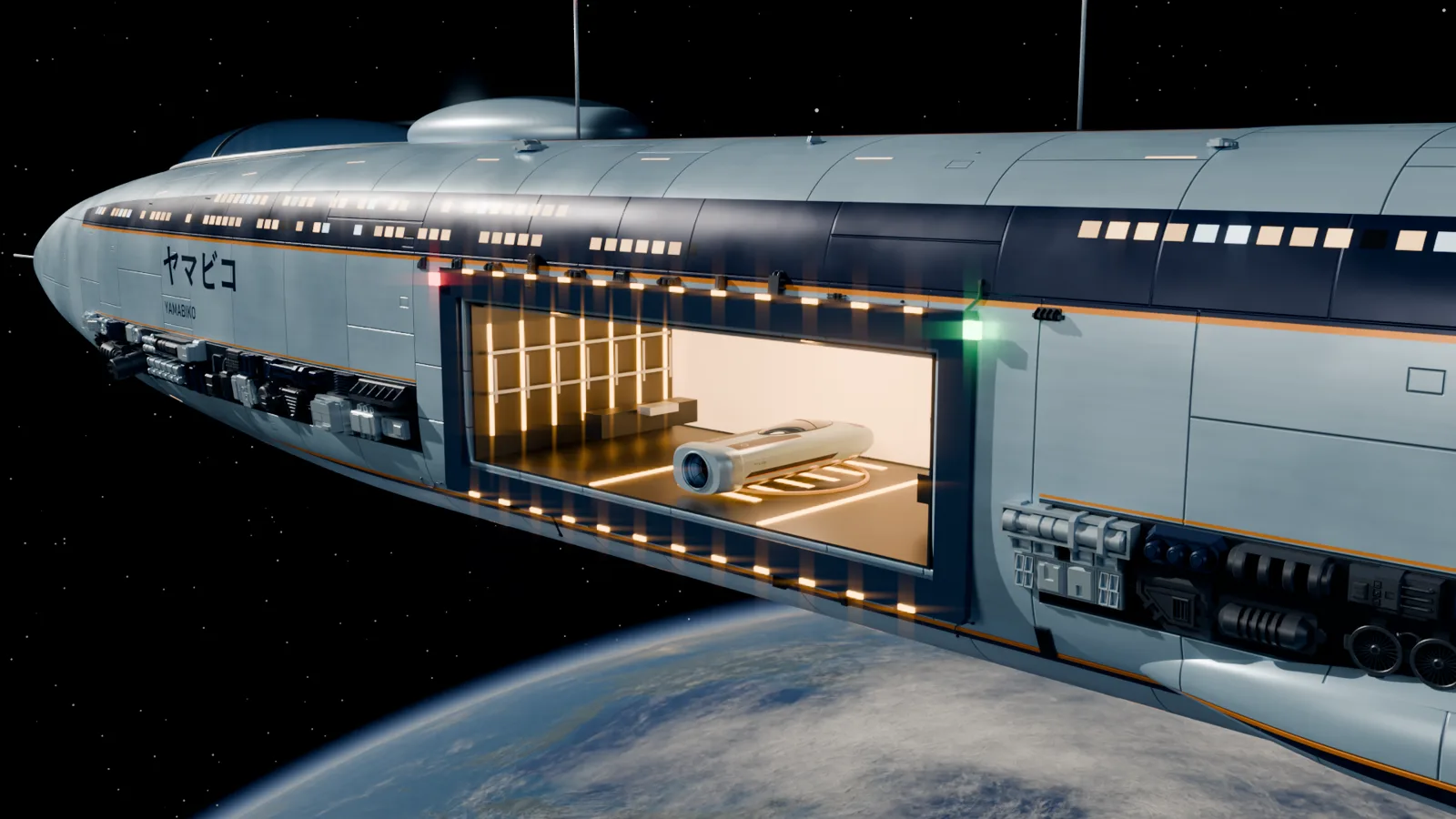
The small ship in the shot is the one in the original concept painting, and it now looks like it: a smooth slab with a raised canopy, navy deck panels and a real open engine mouth with vanes inside. Its paint is a normal texture, so the same model also appears in the game. You can see it parked in the bay from the airlock corridor's window.
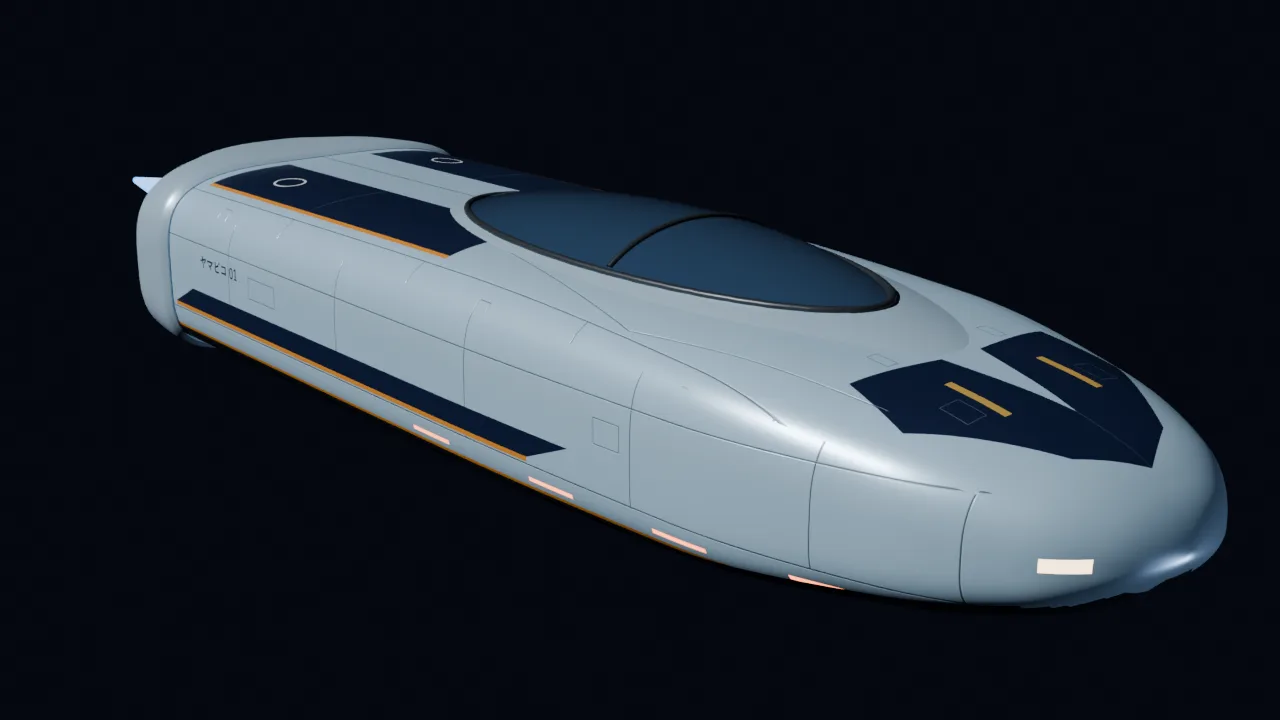
The roundels on its deck are plain placeholders, and so is the "01" on its flank.
Did Godot pass the test?
The reason I moved this project to Godot was lighter tools, with one open question about whether it could look good enough. This shot is my answer for now: huge, detailed exteriors are rendered in Blender and played as video, and everything you walk through is real time in Godot. That plays to each tool's strengths, and it means a planet and a kilometre-long ship never have to run in real time at all.
What is still rough
- The docking bay's interior is still simple compared with the hull around it.
- The clouds are generated, not real weather.
- The shot is 1080p and silent. It has no sound or music yet.
What's next
The ships have now raised the bar for everything else. The crew are moving to a proper Blender character pipeline, and the rooms need real models in place of simple shapes.
Earth imagery credit: NASA's Earth Observatory.
Disclaimer
This is a work-in-progress development log. Everything shown is a prototype and is subject to change without notice.
Back to Blog Hoshi no Isan